

Commentary
For all the menacing rhetoric, the Armenian prime minister remains a leader with whom Putin is prepared to interact: not as an ally, but as a partner, albeit a problematic one.
Alexander Atasuntsev
{
  "authors": [
    "Alper Coşkun",
    "Garo Paylan"
  ],
  "type": "commentary",
  "centerAffiliationAll": "dc",
  "centers": [
    "Carnegie Endowment for International Peace"
  ],
  "englishNewsletterAll": "ctw",
  "nonEnglishNewsletterAll": "",
  "programAffiliation": "EP",
  "programs": [
    "Europe"
  ],
  "regions": [
    "Armenia",
    "Azerbaijan",
    "Türkiye",
    "United States",
    "Europe"
  ],
  "topics": [
    "Foreign Policy",
    "Domestic Politics",
    "Security",
    "Economy",
    "Trade",
    "NATO",
    "EU"
  ]
}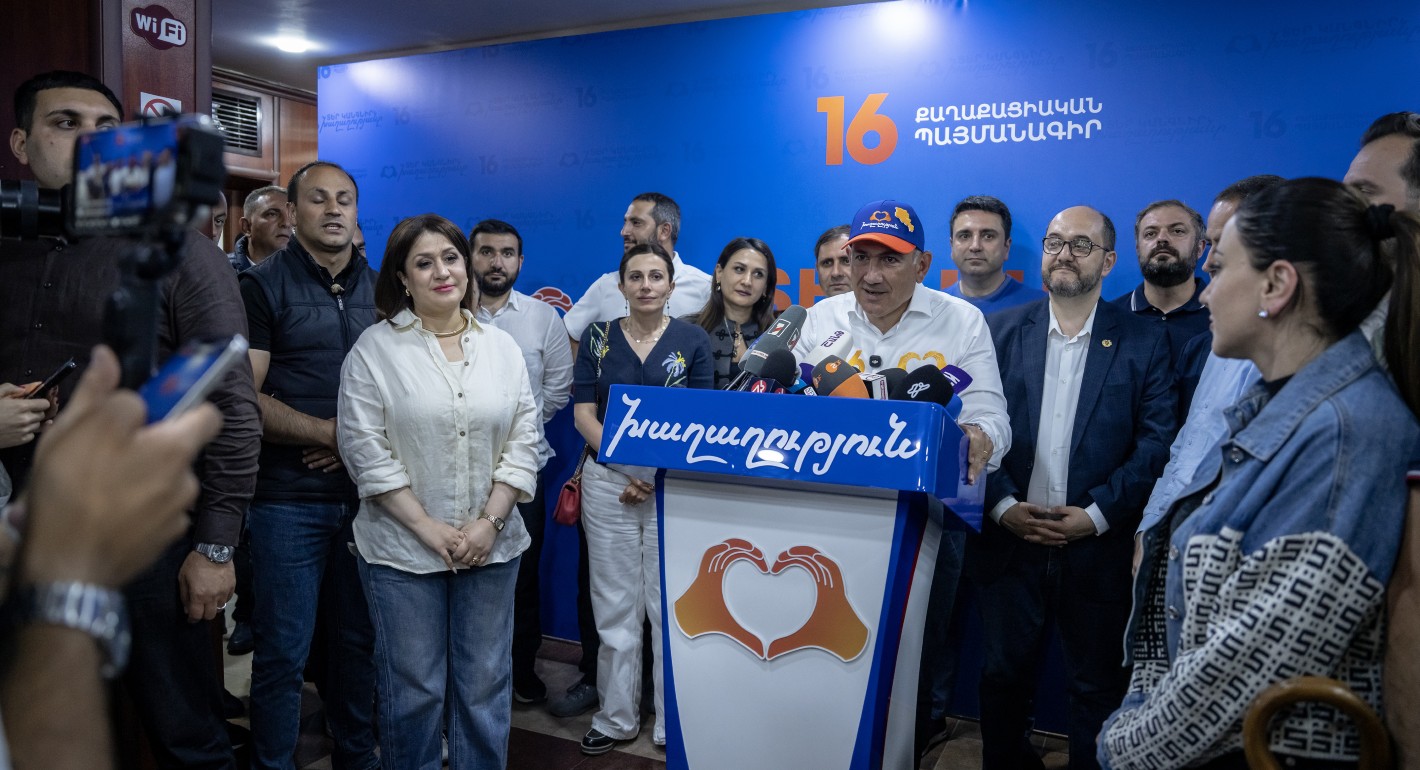
Pashinyan speaks to press in Yerevan, Armenia, on June 8, 2026. (Photo by Ozge Elif Kizil/Anadolu via Getty Images)
It’s time to build momentum, and Ankara is the venue of the next opportune diplomatic window to do this.
Armenia’s election is over, and Prime Minister Nikol Pashinyan has emerged victorious in a vote that may determine the future of the South Caucasus. His victory keeps alive the possibility of peace with Azerbaijan, normalization with Türkiye, and Armenia’s gradual integration into wider regional and Western economic networks. Pashinyan won decisively, but not by a landslide. He has secured another term as prime minister, yet the result may still fall short of the mandate needed to carry out the constitutional amendments Azerbaijan has demanded before finalizing a peace agreement.
That should not become an excuse for delay for either side. On the contrary, a narrower mandate makes it even more imperative for Azerbaijan, Türkiye, the United States, and Europe to help create a visible peace dividend. If the peace process stalls, spoilers will gain ground, and Armenian society will be more likely to view normalization as a unilateral concession. If, instead, peace produces tangible benefits—open borders, trade, investment, energy links, and new economic opportunity—it can begin to generate the domestic legitimacy that any lasting settlement will require.
The upcoming NATO summit in Ankara in July offers a diplomatic window. Turkish President Recep Tayyip Erdoğan should use the occasion to convene, on the sidelines of the summit, a focused meeting with U.S. President Donald Trump, Armenian Prime Minister Pashinyan, and Azerbaijani President Ilham Aliyev. The goal should be to prevent the peace process from stagnating and to collectively commit to building the political and economic foundations that can spur momentum.
The first step should be to open the Türkiye-Armenia border for direct trade and third-country nationals, as a means of implementing peace, with Azerbaijan’s understanding and support. Let trade begin and people move. Let the societies of the region, foremost Armenians, see that normalization can bring benefits. Let Azerbaijan show that victory in war can now be translated into leadership in peace. And let Türkiye demonstrate that its long-standing support for regional connectivity includes Armenia, not only routes around it, and that it can instrumentalize its special bonds with Azerbaijan for the collective good.
The move toward peace is a new chapter for the South Caucasus. On August 8, 2025, Trump hosted Aliyev and Pashinyan at the White House, where the two leaders signed a joint declaration and moved the Armenia-Azerbaijan peace process closer to completion than at any point since the collapse of the Soviet Union. The peace agreement has been initialed but not yet fully signed, and difficult questions remain. Yet the direction is unmistakable: The South Caucasus is closer than ever to replacing war, fragmentation, and inherited mistrust with connectivity, interdependence, and shared economic gain.
That opportunity should not be allowed to drift. The region does not need another frozen diplomatic process. It needs a peace economy.
The Trump Route for International Peace and Prosperity, or TRIPP, can be central to that effort. In narrow geographic terms, it concerns a route across southern Armenia linking Azerbaijan to its enclave of Nakhchivan. In strategic terms, the route could become part of a wider web of transport, energy, digital, and commercial links connecting the Caspian basin, Central Asia, the South Caucasus, Türkiye, and Europe. Properly implemented, TRIPP should not be a corridor that benefits one side at the expense of another. It should be the beginning of a broader South Caucasus economic compact based on sovereignty, reciprocity, and shared gain.
Türkiye has a special role to play. Ankara has long linked normalization with Armenia to progress between Armenia and Azerbaijan. That logic is understandable, but it should now be refined. Progress on one track should reinforce the other. Opening the Türkiye-Armenia border to third-country nationals and trade would not be a concession to Armenia. It would be an investment in regional stability, the Middle Corridor (a network of road, rail, and sea routes linking Europe to Central Asia via the South Caucasus and Türkiye), and Türkiye’s own strategic influence. It would also give Azerbaijan an opportunity to support a step that strengthens the peace process without requiring it to abandon its core negotiating positions.
Ankara can become more than the venue of a NATO gathering in July. It can also be the scene of a pivotal moment when the leaders most invested in the region’s future commit to a clear and actionable road map: translating diplomatic progress into tangible steps through the opening of borders, accelerated work on TRIPP, and the launch of a broader compact for trade, transport, energy, digital infrastructure, and investment.
The logic of such a compact is clear. The South Caucasus sits at the center of a geopolitical arc stretching from the Black Sea basin to Central Asia and the wider Middle East. At a time when war, sanctions, and disruptions have exposed the fragility of global supply chains, the region’s location no longer needs to serve as a vulnerability. It can become an advantage. A peaceful and connected South Caucasus could strengthen the Middle Corridor, add resilience to East-West trade, create new routes for trade, energy, and digital connectivity, and provide the United States and Europe with a more stable bridge to Central Asia.
For Azerbaijan, this is an opportunity to turn military victory into a political achievement and to build on Aliyev’s legacy. Having entered the postconflict phase from a position of strength, Baku can now help shape a regional order in which its security, sovereignty, and economic ambitions are reinforced by peace rather than obscured by perpetual confrontation. Azerbaijan’s centrality to energy, transit, and Caspian connectivity gives it an important role in any future regional compact. But that role will be more expansive and more sustainable if it is exercised as leadership in peace.
For Armenia, the stakes are existential. Pashinyan’s political project rests on the argument that Armenia can be sovereign, secure, and prosperous within its borders, without dependence on outside patrons and confrontation with its neighbors. That vision cannot succeed through words alone. Russia’s long shadow has been a threat to Armenia’s independence. What the country needs is open borders, trade, investment, infrastructure, and a visible improvement in the lives of ordinary Armenians. A Türkiye-Armenia opening would therefore be more than a bilateral gesture. It would help anchor Armenia’s difficult strategic reorientation in concrete economic reality.
For Türkiye, normalization with Armenia would advance several of Ankara’s own longstanding objectives. It would strengthen Türkiye’s role as a regional connector, support its Middle Corridor ambitions all the way to Central Asia, broaden its influence in the South Caucasus, and create a positive agenda with Washington and Brussels at a time when Ankara’s relations with both remain complicated. Erdoğan has a good relationship with Pashinyan. Türkiye has an interest in a region where Armenia is not isolated, Azerbaijan is secure, and trade routes are open. A closed border has long reflected the region’s unresolved conflicts. Opening it would signal that the region is finally entering a postconflict era.
Connectivity, however, cannot be limited to roads and railways. Physical infrastructure matters, but reconciliation also requires a deeper economic foundation. In postwar Europe, coal and steel helped anchor reconciliation by making future conflict materially self-defeating. In the South Caucasus today, the equivalent may lie in the combination of energy and data.
The complementary strengths of the region make this especially compelling. Armenia has a growing technology sector and a strong human-capital base. Azerbaijan has substantial energy resources and ambitions to become a regional center for AI and data infrastructure. Türkiye has industrial capacity, manufacturing depth, and access to European and global markets. Together, these assets could support a new generation of regional projects: data centers powered by reliable energy, digital corridors across the Caspian, electricity and logistics links, and supply chains that connect Central Asia to Europe through a more resilient South Caucasus.
There are already signs that this vision is commercially plausible. Recent investment announcements around AI and data infrastructure in Armenia, including data center projects involving NVIDIA, point to the possibility that the South Caucasus can attract global technology players. Such projects should not be treated as purely national assets. If designed with a regional vision, they can become part of a broader economic architecture in which each country contributes different strengths and shares in the benefits. Azerbaijani and Central Asian sourced energy supplies powering data centers in Armenia could become the equivalent of the steel and coal that helped bind postwar Europe together.
This approach would also align with broader efforts to develop digital corridors across the Caspian and strengthen regional connectivity. The more that businesses, communities, and governments see tangible gains from cooperation, the less space there will be for spoiler reflexes. Peace will become more durable when it is supported not only by leaders and diplomats, but by entrepreneurs, workers, investors, local communities, and ordinary citizens who have something to lose if borders remain closed.
Of course, this vision must take regional realities into account. Armenia and Azerbaijan are both seeking greater strategic autonomy in their foreign policies, but neither can escape geography. East-West connectivity projects are increasingly important to the United States and Europe, while the South Caucasus also serves as a critical North-South corridor that matters greatly to Russia and Iran. The objective should therefore not be to construct a regional order directed against any regional or global actor. The emphasis should remain on an open and inclusive framework centered on connectivity, trade, and development.
For such a vision to succeed, key actors must recognize that there are potential gains for everyone in a more peaceful, connected, and prosperous South Caucasus. A region defined by closed borders invites outside manipulation. A region defined by trade, infrastructure, energy, and digital links will have stronger incentives to manage disputes peacefully. Strategic autonomy in the South Caucasus will not be achieved by replacing one dependency with another. It will be achieved by multiplying options.
Sustaining momentum will also require effective coordination between the United States and Europe. Western support has been instrumental in creating the recent opening, but maintaining progress will require consistent engagement. Washington has invested diplomatic capital through the August 8 process and TRIPP. Europe has a strong interest in Armenia’s resilience, regional trade, energy diversification, and the Middle Corridor. These efforts should reinforce one another rather than proceed on parallel tracks.
A standing coordination mechanism involving the United States, the European Union, Türkiye, Armenia, Azerbaijan, and interested international financial institutions could help monitor progress, identify bottlenecks, mobilize investment, and keep the peace agenda from drifting. Such a mechanism should not become another bureaucratic talking shop. It should be practical, focused, and designed to incubate projects that can produce visible benefits: customs modernization, border infrastructure, transport links, energy cooperation, digital investment, and support for small- and medium-sized businesses that can take advantage of new trade routes.
We write from different histories, but from a shared conviction. One of us served as Türkiye’s ambassador to Azerbaijan. The other is a former member of the Turkish parliament of Armenian origin. We know from different lived experiences within the same country how deep the wounds run—and how easily politics can keep societies trapped in inherited fear, grievance, and mistrust.
That is precisely why we believe this moment must not be wasted. Peace in the South Caucasus cannot be left lingering nor reduced to the technical language of corridors and clauses. It must become visible in ordinary life: in open borders, trade, travel, investment, energy links, digital infrastructure, and the gradual restoration of human contact among peoples who have been kept apart for too long.
For Armenians, Azerbaijanis, and Turks alike, the choice is not between memory and peace. It is between allowing memory and prejudices to become an entrapment or building a future in which history is depoliticized and no longer allowed to constrain the region’s future.
Armenians, Azerbaijanis, Turks, and the wider region deserve a better future—one free of conflict and no longer stuck in a cycle of hatred and rivalry. The recent past has been painful for all sides, and each society carries its own memories, traumas, and narratives. But that past is only part of a much longer shared journey. Understanding each side’s sufferings can go hand in hand with building a different future—one based on coexistence, exchange, trade, and peaceful relations among neighboring peoples.
At a time when conflict is increasingly treated as inevitable, the South Caucasus has a rare chance to prove otherwise. Armenia’s election could be the beginning of advancement rather than another pause. TRIPP and all connectivity projects should move forward, and the region should seize this moment to turn economic interdependence into reconciliation, and reconciliation into shared prosperity.
Editor’s note: The authors used AI in the editing of this piece.

Senior Fellow, Europe Program
Alper Coşkun is a senior fellow in the Europe Program and leads the Türkiye and the World Project at the Carnegie Endowment for International Peace in Washington, DC.

Visiting Scholar, Europe Program
Garo Paylan is a visiting scholar with the Europe Program at the Carnegie Endowment for International Peace in Washington, DC. His research focuses on the South Caucasus and Türkiye.
Carnegie does not take institutional positions on public policy issues; the views represented herein are those of the author(s) and do not necessarily reflect the views of Carnegie, its staff, or its trustees.
For all the menacing rhetoric, the Armenian prime minister remains a leader with whom Putin is prepared to interact: not as an ally, but as a partner, albeit a problematic one.

Alexander Atasuntsev

By fueling the arguments of both supporters and opponents of Armenian Prime Minister Nikol Pashinyan, Azerbaijan wants to ensure he is re-elected with a weaker mandate.

Bashir Kitachaev

Regardless of the outcome, there’s another path to ensuring that progress doesn’t stall.
Zaur Shiriyev
Europe has an interest in supporting Armenian leader Nikol Pashinyan as he tries to make peace with neighbors and loosen ties with Russia. But it is depersonalized support in the long term, not quickfire flash, that will win the day.

Thomas de Waal
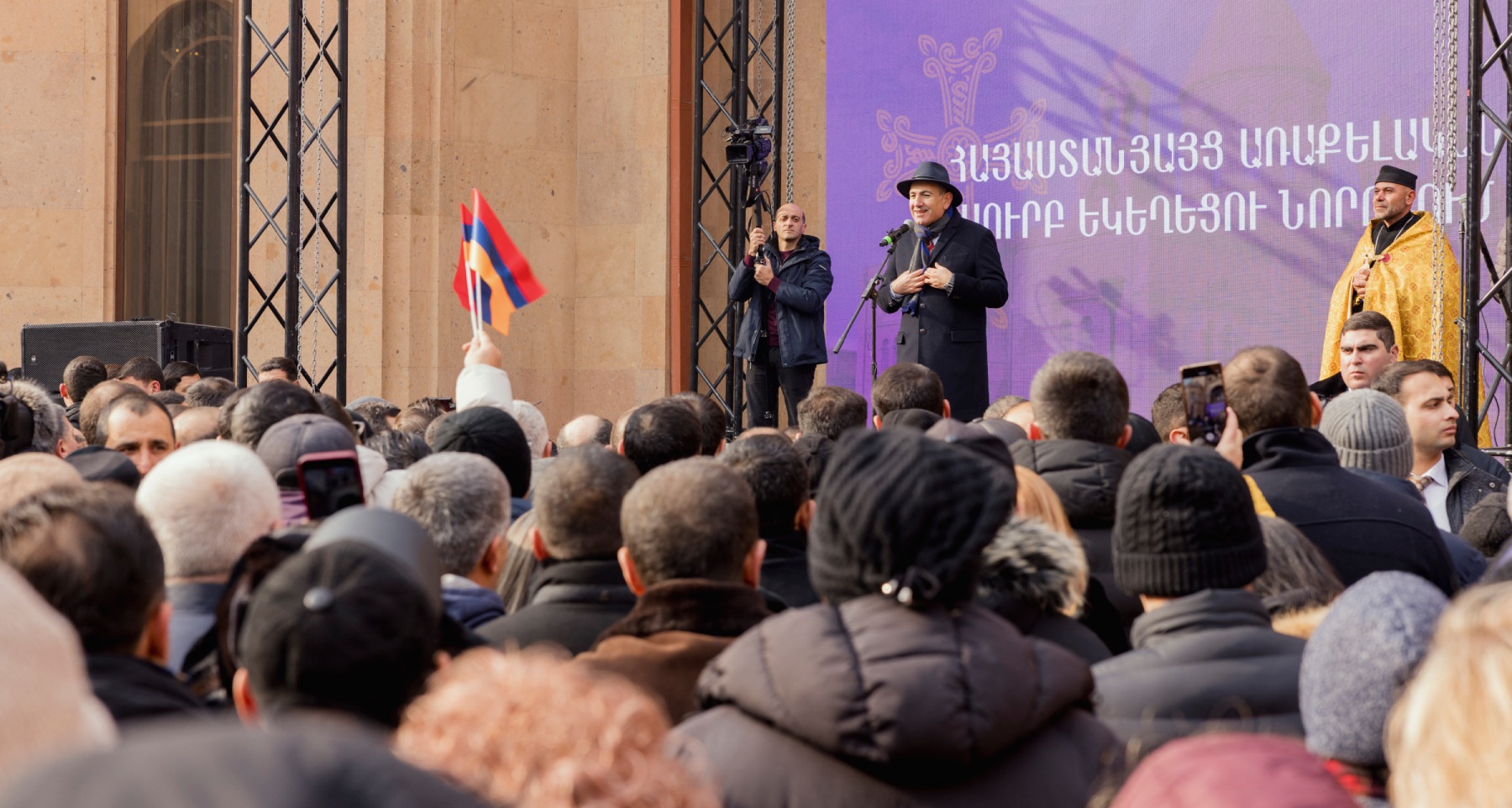
It’s true that many Armenians would vote for anyone just to be rid of Pashinyan, whom they blame for the loss of Nagorno-Karabakh, but the pro-Russia opposition is unlikely to be able to channel that frustration into an electoral victory.
Mikayel Zolyan