

Commentary
For all the menacing rhetoric, the Armenian prime minister remains a leader with whom Putin is prepared to interact: not as an ally, but as a partner, albeit a problematic one.
Alexander Atasuntsev
{
  "authors": [
    "Balázs Jarábik"
  ],
  "type": "commentary",
  "blog": "Carnegie Politika",
  "centerAffiliationAll": "",
  "centers": [
    "Carnegie Endowment for International Peace",
    "Carnegie Russia Eurasia Center"
  ],
  "englishNewsletterAll": "",
  "nonEnglishNewsletterAll": "",
  "primaryCenter": "Carnegie Russia Eurasia Center",
  "programAffiliation": "",
  "regions": [
    "Ukraine"
  ],
  "topics": [
    "Civil Society",
    "Political Reform",
    "Domestic Politics"
  ]
}
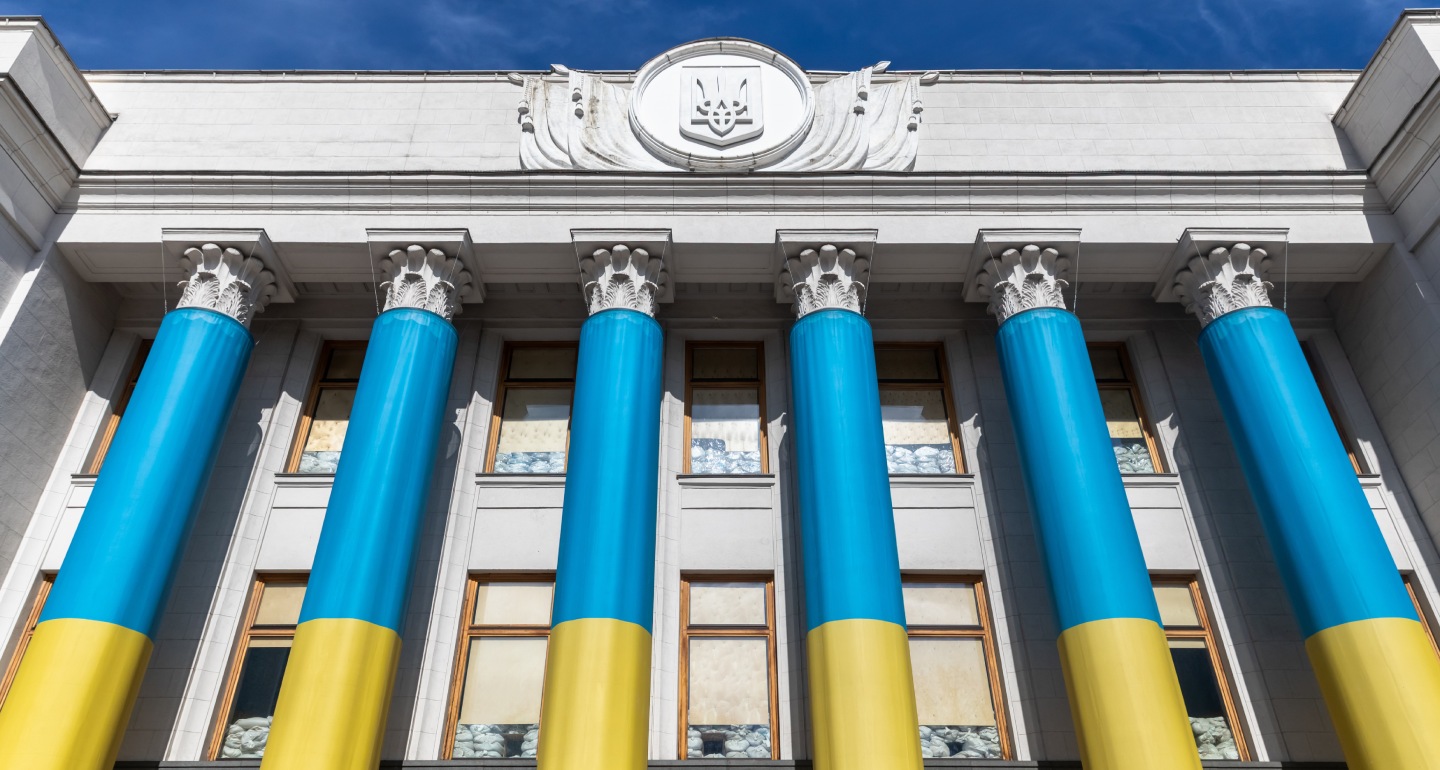
Source: Getty
The return of parliamentary politics reflects a broader shift from earlier expectations of a settlement and elections toward the reality of a prolonged war.
Ukraine underwent a parliamentary setback in the first months of 2026 when the ruling majority failed to pass legislation critical for securing external financing. The failure to get the required number of votes ended with the partial passing of some of the key legislation required by Western donors. Ukraine’s governance system is adjusting to the new equilibrium created by the departure of the once-omnipotent Andriy Yermak from the post of head of the presidential administration following a large-scale corruption scandal. Following Yermak’s replacement with Kyrylo Budanov, a former military intelligence chief, the presidential administration no longer exercises the same level of centralized control over parliament.
The holdup in the Verkhovna Rada was driven by a combination of factors that are now reinforcing each other. The core problem is that the ruling Servant of the People faction has for nearly two years been unable to secure a stable majority on its own, relying instead on situational support from other factions and deputy groups. This system worked as long as it was tightly managed by the presidential administration.
Kyiv is also testing its boundaries with its key donor, the European Union. The parliamentary factions are resisting some politically sensitive reform requirements set by the European Commission. In addition, President Volodymyr Zelensky and the cabinet are set on a rapid integration scheme—which key EU member states now openly oppose. In the end, the ruling party demonstrated that it can mobilize votes when it is absolutely necessary. In early April, with the help of the opposition, it approved measures unlocking at least 2 billion euros in EU funding, signaling that the return of parliamentary politics does not undermine basic state functioning or presidential authority.
Cohesion within the ruling majority has gradually weakened. Dissatisfaction with both the presidential administration and the government led by Yulia Svyrydenko is growing. Many deputies from the Servant of the People faction believe their political contract with President Zelensky has effectively run its course: the formal five-year mandate is seen as completed, while the wartime extension offers limited prospects for re-election or political reintegration. This has reduced discipline and willingness to support politically costly decisions.
High-profile anti-corruption investigations have also had a destabilizing effect on politics. Over one hundred parliamentary deputies are under investigation. The case of former prime minister Yulia Tymoshenko is illustrative: the veteran politician was detained in her office following attempts to buy support from Servant of the People deputies to build a larger coalition around her party. There is a broader sentiment in parliament that if anti-corruption bodies—perceived by many deputies as being backed by Western partners—are contributing to parliamentary disruption, responsibility for advancing EU-backed reforms should shift accordingly.
The breakdown of centralized governance mechanisms has also weakened control over the Verkhovna Rada. The centralized management model associated with Yermak has fragmented following his departure. In its place, a multi-layered power struggle has emerged. There are several centers of influence in the Rada, each with distinct agendas and sources of leverage: the presidential camp; a parliamentary group linked to the Servant of the People faction; and an informal “anti-presidential coalition” bringing together anti-corruption actors and opposition forces. Networks still associated with Yermak continue to play a role, adding another layer of competition.
Importantly, the paralysis was not entirely against presidential interests. The failure to pass unpopular measures—such as EU-requested tax increases, stronger oversight of state-owned enterprises, and greater independence of anti-corruption agencies—makes it possible to shift responsibility to parliament, which already suffers from low public trust. Hence, Zelensky has publicly criticized parliament’s performance, framing legislative effectiveness as part of wartime duty. However, without elections (prohibited under martial law by the Ukrainian constitution), the system lacks a clear mechanism for restoring discipline and legitimacy.
The emerging equilibrium is that competing groups advance their own agendas while also blocking each other. Nevertheless, as the April vote signalized, key decisions—especially ones connected to EU integration, external funding, or war-related legislation—will find the necessary support, as long as the opposition is willing to assist.
The Servant of the People faction led by Davyd Arakhamia and also associated with the new head of the presidential administration, Kyrylo Budanov, has evolved into a political center in its own right. While avoiding open confrontation with the president, it is demonstrating increasing autonomy—most visibly through criticism of the government and insistence on parliamentary involvement in key decisions. Given that external funding is contingent on key votes, Danylo Hetmantsev, head of the parliamentary finance committee, has emerged as an important Rada broker.
Another center is the informal “anti-presidential coalition,” comprising elements of the anti-corruption agencies, segments of civil society, selected media actors, and opposition figures, including former president Petro Poroshenko. Interlocutors in Kyiv describe this grouping as a convergence of interests increasingly aligned with European partners, particularly as U.S.-linked channels have become less prominent.
The president retains significant influence over the security apparatus and regional administrations and continues to shape the cabinet. Zelensky now meets frequently with Prime Minister Svyrydenko and parliamentary speaker Rusland Stefanchuk, instead of his head of office, thereby shoring up their legitimacy. Nevertheless, the presidential camp’s political capital has been weakened by successive corruption scandals. Arakhamia has sought to increase parliamentary agency. His ad hoc, pragmatic coalition-building—combined with increasing EU conditionality as the key donor—has helped to shape a new, albeit fragile, parliamentary equilibrium.
By contrast, the anti-presidential coalition is oriented toward a restructuring of executive power, including a potential government reshuffle, with the aim of reducing presidential dominance. Discussions around alternative leadership scenarios have included figures such as Defense Minister Mykhailo Fedorov, often described by deputies as a “pro-Western” candidate. However, this option faces resistance from Arakhamia as well as Budanov, both of whom maintain strained relations with Fedorov and would instead favor configurations that strengthen Budanov’s position.
Despite overlapping tactical interests—especially dissatisfaction with the current cabinet—these groups have been unable to form a stable coalition. Any attempt to remove the cabinet would likely require at least tacit presidential consent, as sufficient votes in the Verkhovna Rada are unlikely to materialize otherwise. As long as the president retains residual control over key segments of the ruling faction, meaningful realignment remains constrained.
Although the situation is close to a deadlock in that no single actor can impose their agenda, the system continues to function. The parliament still mobilizes votes when necessary, as demonstrated by recent approvals of key EU-related legislation. Strategic decisions such as mobilization and martial law still command cross-factional support.
Near-term dynamics point toward what may be described as a familiar Ukrainian pattern of muddling through. Politically sensitive reforms—especially tax measures and steps linked to IMF and EU requirements—are likely to face delays but ultimately pass. Discussions about a government reshuffle will persist, but in the absence of consensus within the ruling faction and without clear presidential backing, such scenarios remain constrained.
Adaptation to a prolonged war has become an accepted framework, reinforcing baseline cooperation even as political competition intensifies. However, technical preparations for future elections have not stopped. The authorities are exploring mechanisms to organize voting abroad for up to eight million Ukrainian citizens, compared to 150,000–200,000 before the war. Even as the system adjusts to a longer conflict, political actors are positioning themselves for a post-war electoral phase.
The return of parliamentary politics reflects a broader shift from earlier expectations of a settlement and elections toward the reality of a prolonged war. It is also reshaping relations with the European Union, now Ukraine’s key external partner. As recent commentary by a former presidential adviser suggests, Kyiv is increasingly aware that European support is driven by strategic self-preservation, with Ukraine seen as a buffer against Russia rather than a fully integrated partner. While the EU has tightened conditionality, there is a risk that military resilience becomes the primary benchmark of success, crowding out attention to institutional development and political accountability. Over time, a prolonged war could produce a state that is strategically aligned with the West but remains institutionally weak, politically fragile, and difficult to integrate.
Balázs Jarábik
Balázs Jarábik is a political analyst, former Slovak diplomat, and consultant specializing in Eastern Europe. He is the founder of Minority Report, a political-risk consultancy, and author of the Essential Ukraine series at R.Politik. Previously, he was a nonresident scholar at the Carnegie Endowment for International Peace and head of the political and analysis department at the European Union Advisory Mission in Ukraine. His work focuses on political transitions, governance, and regional security across Ukraine, Belarus, Moldova, and Central Europe.
Carnegie does not take institutional positions on public policy issues; the views represented herein are those of the author(s) and do not necessarily reflect the views of Carnegie, its staff, or its trustees.
For all the menacing rhetoric, the Armenian prime minister remains a leader with whom Putin is prepared to interact: not as an ally, but as a partner, albeit a problematic one.

Alexander Atasuntsev
The issue is not that the president only has selective information at his disposal, but that the decision-making process consists of one person with an unshakeable vision of how the world works.

Tatiana Stanovaya

By fueling the arguments of both supporters and opponents of Armenian Prime Minister Nikol Pashinyan, Azerbaijan wants to ensure he is re-elected with a weaker mandate.

Bashir Kitachaev
A much-discussed disagreement over internet restrictions in Russia was never an existential threat for Putin: It was about elite groups protecting their interests.

Alexandra Prokopenko
By reminding the world that Lukashenko is a threat to NATO and Ukraine, Kyiv is trying to return the focus to why the Belarusian regime needs to be contained rather than rewarded.

Artyom Shraibman